
- All
- Product Name
- Product Keyword
- Product Model
- Product Summary
- Product Description
- Multi Field Search
English


Views: 0 Author: Site Editor Publish Time: 2026-08-16 Origin: Site


Selecting cosmetic packaging represents a critical operational decision rather than a simple aesthetic choice. Formulators and supply chain managers constantly face a difficult balancing act. Your packaging choice directly impacts formula efficacy, shelf life, and unit economics. Brands often default to standard lotion pumps for immediate upfront savings. Unfortunately, they later face high return rates due to rapid product oxidation and spoilage. Conversely, some brands over-invest in advanced dispensing systems for simple formulas, ruining their profit margins.
This article provides a strict, mechanical, and commercial evaluation of the Airless Bottle versus standard pump containers. Our goal is to help you align your packaging infrastructure directly alongside your formulation requirements. You will learn the exact physical mechanisms driving both dispensers. We also explore viscosity limits, evacuation rates, and automated filling line compatibility.
By the end of this guide, you will understand exactly when to deploy each packaging type. You can make a highly informed, data-driven sourcing choice for your next major product launch.
Mechanism: Standard pumps rely on a dip tube and air intake to dispense product, whereas an airless bottle uses a vacuum and an internal piston, never allowing air into the chamber.
Preservation: Airless packaging is mandatory for oxygen-sensitive actives (like Vitamin C or Retinol); standard pumps are sufficient for stable, high-volume formulas (like body lotions).
Evacuation Efficiency: Airless systems yield a 95–99% product evacuation rate, drastically reducing consumer complaints about wasted product.
Cost vs. ROI: While airless systems have a higher upfront unit cost, they can reduce formulation costs by requiring fewer preservatives and elevating perceived brand value.
Understanding the exact engineering behind different dispensers helps you avoid costly packaging failures. Each mechanism fundamentally alters how your product interacts with its external environment. Let us explore the physical architecture driving both systems.
How it works: The traditional design relies on a specialized spring-loaded pump head. It utilizes a long plastic dip tube reaching down to the bottom of the container. Pressing the actuator forces the liquid upward through the tube. This dispensing action creates a temporary void inside the main container. To equalize internal pressure, ambient air pulls back into the bottle through small hidden vents. The system repeats this cycle during every single use.
The Trade-off: This pressure equalization process carries inherent chemical risks. Ambient air introduces oxygen directly into the formula bulk. It also invites potential bacterial contaminants from humid bathroom environments. Over time, constant air exposure degrades sensitive ingredients rapidly. Formulators must rely heavily on robust preservative systems to counteract this daily environmental exposure.
How it works: This advanced dispensing mechanism operates entirely on a pressure differential. It contains no dip tube whatsoever. When you press the pump, a one-way valve dispenses the product outward. This action creates a rigid vacuum inside the primary chamber. The resulting vacuum forces a hidden disc, known as the piston, upward from the base. The piston continuously pushes the remaining bulk formula toward the top dispensing valve.
The Trade-off: Engineering a vacuum system introduces higher mechanical complexity. Consequently, it carries a higher unit cost per piece. However, it creates a fully enclosed, airtight environment. Zero backflow occurs during operation. No outside air ever touches the remaining product inside the chamber. This precise engineering protects delicate chemical compositions effectively.
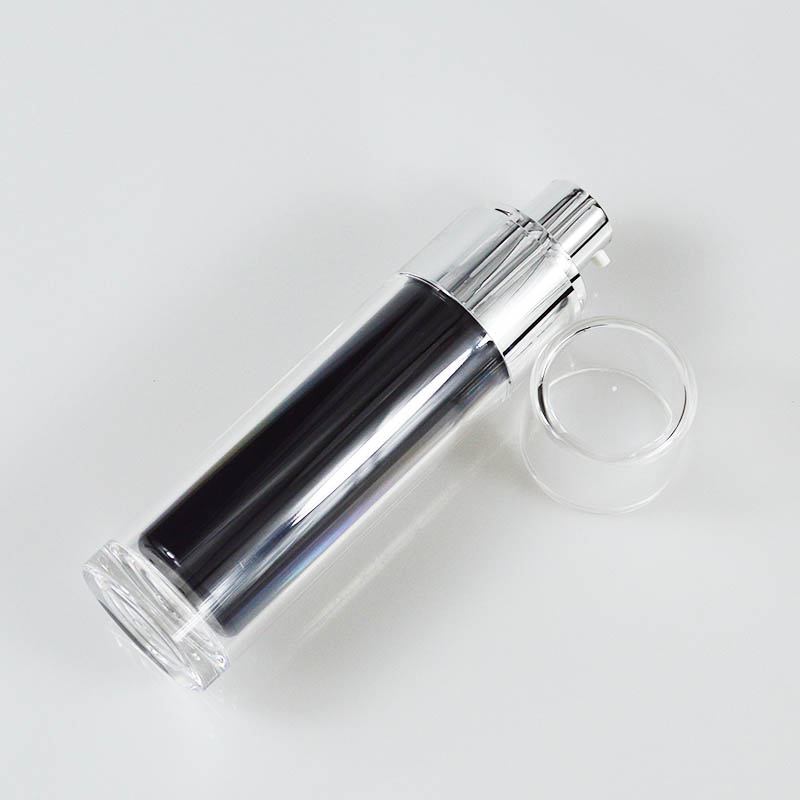
Evaluating dispensers requires analyzing both chemical stability and daily user experience. Product engineers look closely at oxidation risks, fluid dynamics, and waste reduction.
Standard pumps show extreme vulnerability to oxidation. They actively pull ambient air into the chamber to function. Therefore, they are strictly not suitable for formulas lacking strong preservative systems. Sensitive compounds, such as L-ascorbic acid, rapidly oxidize and turn brown when exposed.
Conversely, vacuum systems achieve near-zero vulnerability. They prevent oxidation and naturally extend product shelf life by up to 15%. This design maintains the absolute purity of active ingredients. Dermatologists and industry standards heavily recommend this zero-exposure approach for clinical skincare lines.
Traditional tubes often struggle with highly viscous creams. Thick formulas cannot flow fast enough to fill the pressure void. This physical limitation causes "cavitation" or tunneling inside the jar. The pump simply sucks empty air while heavy product sticks stubbornly to the outer walls.
A vacuum mechanism handles higher viscosities flawlessly. The internal piston applies continuous upward pressure against the fluid. It actively forces heavy creams into the top dispensing valve. However, the system fails with ultra-thin, water-like liquids. Thin liquids easily bypass the rubber piston seal and leak out the bottom.
Consumers hate leaving expensive product behind. A standard tube typically leaves 10–15% of the product clinging to walls and the bottom. Users often resort to unscrewing the cap and vigorously shaking the bottle. This poor experience harms brand loyalty.
Vacuum technology achieves an impressive 95–99% evacuation rate. As the base piston rises, it cleanly scrapes the inner walls. This mechanical efficiency directly satisfies high-end consumer expectations. It eliminates user frustration and easily justifies a premium retail price point.
Dispenser Performance Comparison
Feature Criteria | Standard Pump System | Vacuum Piston System |
|---|---|---|
Air Exposure | High (Requires air intake) | Zero (Fully enclosed vacuum) |
Best Viscosity | Thin to medium lotions | Medium to heavy creams |
Evacuation Rate | 85% - 90% | 95% - 99% |
Unit Complexity | Low (Dip tube and spring) | High (Piston, valve, vacuum) |
Choosing correctly means matching packaging capability directly to formula chemistry. It also requires aligning your choice with broader commercial goals. Let us examine exactly when you should deploy each specific option.
You should deploy traditional pumps for durable, everyday formulas. They work perfectly for standard body lotions, generic shampoos, and basic daily cleansers. These products boast highly stable chemical compositions.
From a commercial perspective, they offer a remarkably low cost per unit. Standard pumps remain highly scalable for rapid growth. They are universally compatible with nearly all high-speed automated filling lines. They make perfect sense for mass-market, high-volume consumer goods where rapid production speed dictates profitability.
You must deploy vacuum systems for delicate, high-performance formulations. They protect organic lines, low-preservative mixtures, and Rx topical treatments. They represent the absolute gold standard for premium, active-ingredient skincare.
Commercially, the vacuum system strongly protects internal formula integrity. Preserving the formula justifies a significantly higher retail price point. By completely eliminating oxidation, it prevents negative consumer reviews regarding premature product spoilage. The investment protects your brand equity over the long term.
Modern cosmetic brands constantly navigate a difficult tension. They must provide premium aesthetics while maintaining strict environmental responsibility. Consumers demand both luxury and ecological awareness.
The Aesthetic Problem: Standard PP (Polypropylene) vacuum systems often feel very lightweight in the hand. They lack the substantial "weight" expected of true luxury skincare. High-end consumers implicitly associate heavy, dense packaging with premium formulation quality. Lightweight plastics often signal cheapness to affluent buyers.
The Solution: Using a dense acrylic outer shell dramatically transforms the user experience. Acrylic provides brilliant glass-like transparency. It adds significant physical weight and a premium tactile feel. It mimics the luxurious presence of heavy glass without the associated shattering risks during shipping.
The Eco-Compliance Angle: Single-use mixed plastics currently face intense regulatory pushback globally. Brands must adapt to new sustainability frameworks. Refillable Acrylic Airless Bottles directly solve this modern compliance challenge. They keep the heavy, expensive acrylic shell permanently reusable. Consumers only purchase and replace the inner lightweight PP cartridge. This intelligent design drastically cuts down on single-use plastic waste while preserving luxury margins.
Sourcing Consideration: You must carefully evaluate the internal refill cartridge mechanism before ordering. Buyers should rigorously test both snap-in and twist-off designs. You must ensure the cartridge replacement process does not compromise the delicate vacuum seal. If a user breaks the seal during replacement, the entire preservation benefit vanishes instantly.
Transitioning to advanced vacuum packaging requires upgrading your manufacturing protocols. You must understand the specific filling requirements to avoid disastrous production runs.
Vacuum designs demand incredibly strict filling protocols. You must fill them exclusively from the top downward. Manufacturers must leave absolute minimal air pockets inside the chamber. Trapped air prevents the piston from engaging, leading to immediate priming failures. Conversely, standard dip tubes remain much more forgiving on fast, automated filling lines.
Hot-pour formulas present unique dangers to advanced packaging. High temperatures can easily warp the inner plastic piston during the fill process. If the internal piston warps even slightly, it breaks the vacuum seal completely. The product will simply leak. You must always test your maximum fill temperatures before executing full-scale production runs.
Here are crucial best practices for managing fill temperatures and line setup:
Identify the exact heat deformation threshold of your chosen piston material.
Cool hot-pour formulas to a safe intermediate temperature before filling.
Calibrate automated filling nozzles to minimize excessive aeration.
Conduct small batch trials to monitor seal integrity post-cooling.
Operators must fill the chamber to its absolute brim capacity. If they leave a gap, serious issues arise. The pump will require multiple "empty pumps" by the consumer to build the initial vacuum. This simple mechanical delay often triggers premature consumer defect reports. Buyers assume the mechanism is completely broken. Adhering to precise filling tolerances mitigates this operational risk entirely.
Consider these standardized steps to prevent priming failures during manufacturing:
Program filling machines to hit the exact brim-full capacity of the specific container.
Utilize bottom-up filling nozzles to physically push air out as the liquid rises.
Implement strict quality control checks to weigh filled units before capping.
Apply the actuator head immediately after filling to lock out ambient air.
Selecting the ideal dispensing mechanism demands a deep understanding of your formula's unique chemical behavior. It also requires clear alignment with your brand's market positioning. Standard pumps offer unbeatable scalability and cost-efficiency for highly stable, mass-market goods. Meanwhile, vacuum piston systems deliver unparalleled chemical protection and a premium user experience for sensitive actives.
Keep these concise takeaways in mind for your procurement strategy:
Do not purchase advanced vacuum packaging solely for the current aesthetic trend.
Always match your packaging mechanics directly to the chemical stability of your formulation.
Ensure the selected unit economics align perfectly with your target profit margins.
Request detailed technical specification sheets, specifically noting maximum viscosity compatibility.
Conduct a rigorous 30-day accelerated stability test using physical samples before finalizing your vendor sourcing decision.
By carefully evaluating these mechanical criteria, you ensure product integrity from the factory floor to the consumer's daily routine.
A: Yes, typically by preventing oxidation and reducing ambient bacterial exposure. It eliminates oxygen intake entirely. However, the exact timeline depends on the formula's inherent stability and active ingredients. Highly sensitive actives like Vitamin C see the most dramatic shelf-life extensions.
A: Usually, this happens due to a small air pocket trapped during the manufacturing fill process. Pumping the actuator 10–15 times typically builds enough internal pressure. This action establishes the vacuum, engages the piston upward, and resolves the dispensing issue quickly.
A: Yes. Standard pumps require fewer molded parts. They use much simpler mechanics without specialized vacuum seals. This makes them significantly cheaper per unit at scale. However, they may cost more later in terms of lost product, consumer returns, or accelerated spoilage for sensitive formulas.


