
- All
- Product Name
- Product Keyword
- Product Model
- Product Summary
- Product Description
- Multi Field Search
English


Views: 0 Author: Site Editor Publish Time: 2026-08-31 Origin: Site


Cosmetic packaging transcends mere aesthetic appeal in today's demanding market. It acts as a vital functional barrier for your product. This physical shield ultimately dictates product efficacy, shelf life, and brand reputation. Choosing the wrong delivery system often leads to severe consequences. You might face rapid formula oxidation, premature pump failure, and soaring return rates. These issues compromise sensitive active ingredients and destroy consumer trust quickly. Your packaging decisions define the final consumer experience.
This guide provides a definitive evaluation framework for procurement and product development teams. You will learn how to shortlist, test, and confidently select the optimal packaging systems. We designed this resource to help you navigate modern cosmetic dispensing solutions effectively. Read on to master the technical nuances and protect your high-value formulations.
Formulation dictates the packaging: Viscosity, pH levels, and active ingredients (like Vitamin C or Retinol) must drive your initial material selection.
Internal mechanics matter: True formula protection requires evaluating metal-free fluid pathways and choosing between piston-driven or bag-in-bottle systems.
Customization must align with compliance: Leveraging custom airless skincare bottles should integrate sustainable materials (PCR) without compromising the vacuum seal or structural integrity.
Validation prevents rollout failure: Mandatory compatibility testing and vacuum leak assessments are non-negotiable steps before committing to high-volume manufacturing.
Brands face a persistent challenge when launching active-rich cosmetics. Standard dip-tube pumps and squeezy tubes introduce external air every time a consumer dispenses the product. This continuous exposure pushes oxygen and bacteria directly into the bulk formula. Volatile active ingredients break down rapidly under these conditions. Efficacy drops, colors shift, and the product ultimately fails the consumer.
Upgrading to a Airless Bottle solves this core business problem. This packaging technology relies on a vacuum mechanism rather than a traditional suction tube. By isolating the product entirely, brands deliver a pristine formula from the first drop to the last.
The airless advantage provides tangible value to both the consumer and the brand:
Prevents oxidation and cross-contamination: A sealed environment blocks external air. This protection extends shelf life by up to 15%, ensuring sensitive ingredients remain potent.
Achieves a 95-99% product evacuation rate: Consumers despise leaving expensive skincare at the bottom of a bottle. Vacuum systems push almost every drop out, eliminating user frustration and perceived product waste.
Allows for precise, repeatable dosage: Clinical-grade treatments require exact application amounts. Vacuum pumps dispense a uniform dose every single time, which proves essential for high-concentration serums.
Selecting the right container begins by analyzing the cosmetic formula itself. You cannot force a thick cream into a vessel designed for a watery toner. Formulation characteristics must dictate your hardware choices.
Viscosity and flow dynamics play a massive role in mechanical performance. The thickness of your lotions, creams, or serums dictates the required vacuum tension. A highly viscous body butter requires a larger pump engine to pull the product upward. Conversely, a thin facial serum needs a highly controlled, smaller engine to prevent accidental leaking or aggressive spurting.
Follow this systematic approach when matching formulas to materials:
Assess the pH level and chemical aggression: Identify if your product contains highly acidic elements or strong solvents.
Determine the light sensitivity: Review active compounds to see if UV exposure causes degradation.
Evaluate target aesthetics: Decide if the product requires a luxury glass-like appearance or a functional, medical-grade finish.
Chemical compatibility strictly governs material selection. Polypropylene (PP) offers high chemical resistance. It acts as an ideal barrier for aggressive active ingredients and remains fully recyclable. PETG and Acrylic (PMMA) deliver premium, glass-like aesthetics perfect for luxury positioning. However, these clear plastics require careful compatibility testing. Certain solvents or high-oil formulas can cause PMMA to crack or cloud over time.
Light sensitivity demands equal attention. UV rays quickly neutralize compounds like retinol and ascorbic acid. You must evaluate opaque, frosted, or heavily UV-coated finishes to protect light-sensitive formulas from environmental degradation.
Material Type | Visual Finish | Chemical Resistance | Best Application |
|---|---|---|---|
Polypropylene (PP) | Opaque / Translucent | Very High | Aggressive actives, clinical serums, daily lotions |
Acrylic (PMMA) | Glass-like / Clear | Moderate | Luxury creams, low-solvent gels, prestige lines |
PETG | Clear / Glossy | High | Mid-tier cosmetics, thicker emulsions |
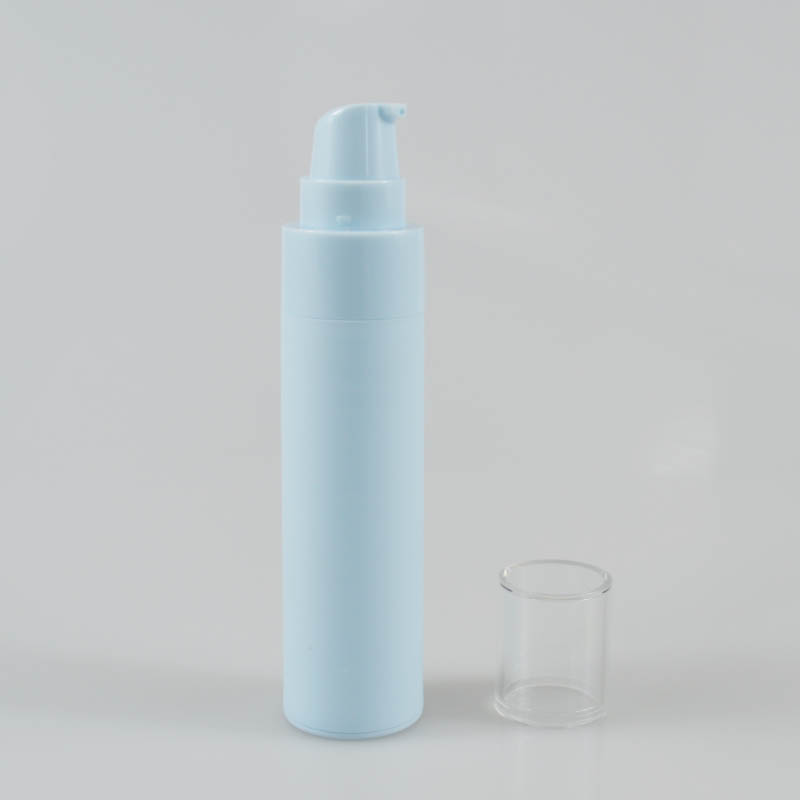
Internal mechanics dictate how reliably your product dispenses in the real world. True formula protection requires looking beyond the outer shell and scrutinizing the internal fluid dynamics.
Engineers typically utilize two primary vacuum systems: piston-driven and bag-in-bottle (pouch) systems. Piston systems remain the industry standard for traditional creams and serums. They rely on a plastic disc at the base of the container. As the consumer pumps the actuator, a vacuum effect pulls this internal disc upward, pushing the liquid out.
Bag-in-bottle systems utilize a collapsible inner pouch suspended inside a rigid outer shell. When the pump activates, the pouch shrinks. This system proves ideal for highly viscous materials or extremely sensitive formulas. The pouch conforms tightly to the product, leaving zero headspace for trapped air.
System Feature | Piston-Driven System | Bag-in-Bottle (Pouch) System |
|---|---|---|
Mechanism | Rising internal base disc | Collapsing internal flexible pouch |
Formula Suitability | Standard lotions, serums, light creams | Highly viscous pastes, pure oils, extreme actives |
Evacuation Rate | ~95% | Up to 99% |
Manufacturing Complexity | Standard / Widely Available | Advanced / Specialized Assembly |
Fluid pathway security represents another critical failure point. Traditional pump springs sit directly in the product flow path. Exposing a cosmetic formula to metal components invites disaster. Ingredients can react with the metal, causing rust, odor changes, or severe chemical degradation. You must choose an external spring mechanism or a completely metal-free fluid pathway. This ensures the liquid only touches inert plastics.
Actuator design rounds out the mechanical evaluation. The nozzle type must match your product texture. A standard orifice works well for most lotions. However, if your formula dries quickly when exposed to air, it will crust at the tip. Integrating a self-sealing silicone valve into the nozzle prevents drying, clogging, and unwanted crusting.
Standing out in a crowded cosmetic market requires strategic differentiation. Consumers scan shelves quickly. You must balance functional internal design with a compelling exterior brand identity. Developing Custom Airless Skincare Bottles allows brands to merge high-performance mechanics with striking visual appeal.
Decoration and finishing capabilities elevate a standard cylinder into a prestige object. Suppliers offer numerous techniques to achieve your desired look. Silk screening provides crisp, durable typography for clinical brands. Hot stamping adds metallic accents for luxury lines. Color injection creates uniform, opaque shades that protect against UV rays. Matte and gloss over-varnishes alter the tactile experience, giving the packaging a premium feel in the consumer's hand.
Simultaneously, the industry faces a massive shift toward sustainable solutions. Regulatory bodies and consumers demand eco-friendly alternatives. Evaluating Post-Consumer Recycled (PCR) plastics is now a standard practice. However, adding PCR content can sometimes alter the physical properties of the plastic. Procurement teams must assess potential structural compromises against the eco-credentials. A bottle made of 100% PCR might become brittle, risking the integrity of the vacuum seal. Blending 30% to 50% PCR often provides the best balance between sustainability and durability.
Refillable systems represent the next frontier in sustainable packaging. These units separate the permanent exterior from the disposable interior. Creating a successful refillable system requires strict mechanical tolerances. The durable outer shell must withstand years of handling. Meanwhile, the replaceable inner pod must lock securely into place without leaking or compromising the dispensing vacuum. Testing the snap-fit or screw-thread locking mechanisms prevents consumer frustration during the refill process.
A brilliant design means nothing if the manufacturer cannot produce it reliably at scale. Vendor evaluation serves as your primary defense against catastrophic product launches. Mitigating implementation risks requires understanding common failure modes in vacuum packaging.
You must watch out for vacuum seal leaks, failure to prime, and piston jamming. If the container allows even a microscopic amount of air inside, the piston will fail to rise. If the pump engine lacks sufficient suction, the consumer will pump the actuator repeatedly with no result. Jamming occurs when the internal disc binds against the cylinder wall due to poor manufacturing tolerances.
The compatibility testing phase remains absolutely mandatory. Brands must conduct 30, 60, and 90-day stability tests before greenlighting mass production. You must test the exact formula inside the exact prototype. Expose these samples to varying temperatures, from freezing to extreme heat. This simulates global shipping conditions and proves that the packaging will not crack, leak, or react chemically over time.
Assess your supplier's manufacturing Quality Assurance (QA) standards rigorously. Look for the following indicators of excellence:
Automated vacuum testing: High-tier factories test every single unit for seal integrity on the assembly line, rejecting microscopic leaks automatically.
ISO certifications: Standardized management systems ensure consistent batch-to-batch output.
Cleanroom assembly: Medical-grade or high-end cosmetic packaging should be assembled in dust-free environments to prevent internal contamination before the bottle ever reaches your filling line.
Apply strict shortlisting logic when finalizing your vendor. Evaluate suppliers based on their Minimum Order Quantities (MOQs). High MOQs can cripple a startup's cash flow, while low MOQs might indicate a lack of scaling capability. Assess their stated lead times to ensure they align with your marketing launch dates. Verify sampling availability; a supplier unwilling to provide pre-production prototypes hides major risks. Finally, gauge their post-sale troubleshooting support. If a batch fails on your filling line, you need a partner who will actively solve the mechanical issue rather than deflecting blame.
Successfully navigating the complexities of cosmetic packaging requires a disciplined approach. We recommend following a strict procurement decision framework. Begin with formula compatibility to establish your baseline material needs. Next, execute a thorough mechanical evaluation, choosing the right pump engine and fluid pathway. Proceed to integrate customization and sustainability initiatives to align with your brand identity. Finally, subject the chosen system to rigorous stability testing.
Packaging acts as a critical extension of the cosmetic formula itself. A premium serum housed in an inferior dispenser ultimately becomes an inferior product in the eyes of the consumer. Prioritizing structural integrity protects your formulation investment and secures long-term brand loyalty.
Your next step requires immediate action. Encourage your product developers to request technical drawings and Material Safety Data Sheets (MSDS) from prospective suppliers. Order physical prototypes today and initiate your initial 30-day formula compatibility testing to keep your product launch on schedule.
A: Standard compatibility testing takes between 12 to 16 weeks. Brands typically conduct evaluations at 30, 60, and 90-day intervals. Technicians expose the filled packages to varying temperatures and humidity levels. Accelerating this process risks missing delayed chemical reactions or slow vacuum leaks.
A: Yes, but it requires a specialized pump engine. Standard vacuum pumps are designed for thicker lotions and serums. If you use a standard pump for watery liquids, it may spurt aggressively or leak. You must specify a low-viscosity engine design when requesting prototypes.
A: MOQs for customized vacuum packaging generally range from 10,000 to 20,000 units per sku. Standard, uncustomized models might be available at lower quantities (around 5,000 units). Highly specialized decorations or custom color injections often push the MOQ closer to 25,000 units.
A: This is called the priming phase. The pump must expel the small pocket of air sitting in the actuator head before it can generate enough vacuum tension to pull the product up. Depending on the engine size, it usually takes 3 to 10 pumps to fully prime the system.
A: Recyclability depends on the material composition. Bottles made entirely of mono-material plastics, like 100% Polypropylene (PP), are widely accepted in municipal recycling streams. However, systems containing mixed plastics, metal springs, or distinct inner pouches often require disassembly, making them difficult for standard facilities to process.


