
- All
- Product Name
- Product Keyword
- Product Model
- Product Summary
- Product Description
- Multi Field Search
English


Views: 0 Author: Site Editor Publish Time: 2026-08-01 Origin: Site


High-potency skincare formulations require advanced packaging solutions. You must protect active ingredients from rapid degradation caused by environmental exposure. Traditional dip-tube pumps often introduce oxygen and microbial contamination directly into the product chamber. This damages delicate formulas over time. Today, airless packaging serves as the unquestioned industry standard for premium serums and creams. These systems utilize a non-pressurized vacuum mechanism. They safeguard sensitive compounds brilliantly.
You will learn the exact mechanical operation of these advanced cosmetic dispensers below. We evaluate their specific compatibility with various skincare viscosities. Finally, we outline the practical implementation realities you face when scaling product lines. Understanding these engineering fundamentals ensures you launch reliable, high-performing skincare products.
Mechanical advantage: Airless bottles use a rising internal piston and a vacuum pump instead of a traditional dip tube, preventing air from touching the product.
Formulation protection: Ideal for oxygen-sensitive actives (Vitamin C, Retinol) and products with minimal preservatives.
Consumer outcome: Achieves a 95–99% product evacuation rate, resolving common consumer complaints about wasted skincare.
Manufacturing reality: Requires specialized vacuum-filling equipment to prevent air pockets, making prototyping (e.g., with a standard 30g 1oz airless pump bottle) a critical first step.
We must first contrast these systems with traditional dip-tube packaging. Standard cosmetic pumps rely on a simple plastic straw. You press the pump downward to draw liquid up. To replace the dispensed liquid, ambient air enters the container through the top mechanism. This airflow introduces oxygen directly into your formulation. Oxidation immediately begins degrading sensitive ingredients. We frequently see color shifts and scent changes in traditional packaging as a result.
The vacuum system mechanism works entirely differently. It eliminates ambient air exposure through applied physical principles.
Here is how the vacuum sequence operates:
Depressing the top pump creates an immediate vacuum effect inside the sealed chamber.
Atmospheric pressure enters through a tiny ventilation hole located at the base of the bottle.
This ambient pressure pushes the internal disc firmly upward.
The rising piston forces the product out through the top nozzle.
The system never introduces air into the active formulation chamber.
Let us break down the core components. You have three primary parts working in perfect synchronization.
First, we examine the actuator and engine. This top pump mechanism dictates your exact dosage output. You often see components calibrated strictly for 0.2cc per stroke. The internal springs and ball valves prevent backflow.
Next is the internal piston. We consider this the movable base. It rises steadily as the consumer depletes the skincare product. The piston features rubberized or silicone edges to scrape the walls clean.
Finally, you have the cylinder. This outer or inner housing requires strict dimensional tolerances. If a manufacturer molds a cylinder poorly, the piston cannot glide. A compromised glide creates extreme friction. If the cylinder gap becomes too wide, the essential vacuum seal breaks entirely. Verifying these structural tolerances prevents massive product failures later.
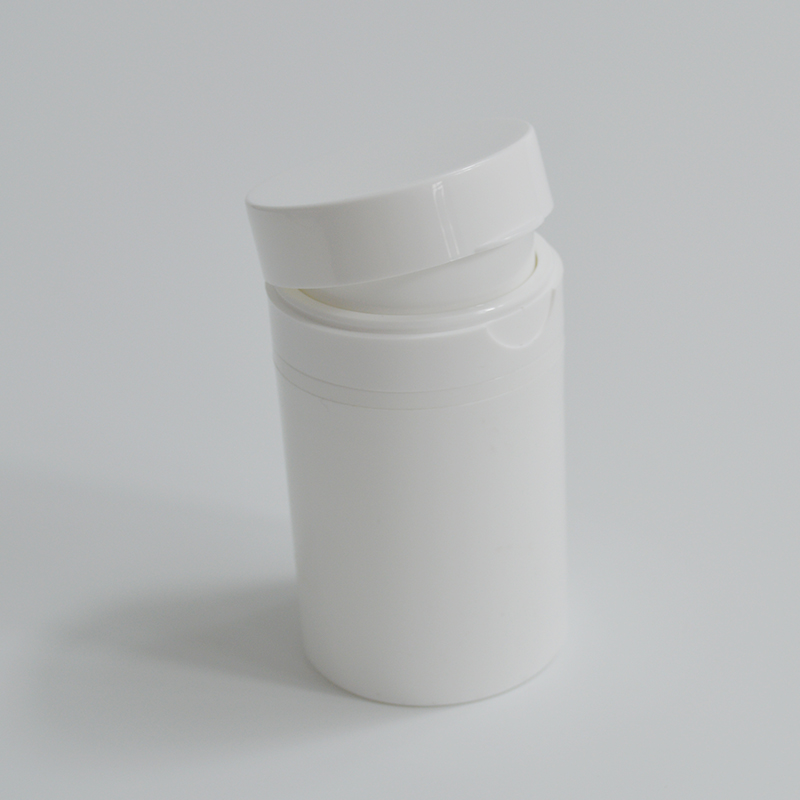
Is a vacuum system the right choice for your specific product? You must evaluate viscosity constraints first. The pumping mechanism relies entirely on distinct fluid dynamics.
Let us look at ideal matches. Medium-to-high viscosity lotions, dense creams, and thick serums perform beautifully. Your product must possess sufficient surface tension. This tension helps pull the piston upward during the dispensing action. Without adequate density, the physics simply fail.
Conversely, completely incompatible products exist. Highly watery liquids like facial toners and micellar waters pose serious risks. They easily seep past the piston seal and leak. Extremely thick pastes also create severe problems. They cause a phenomenon called pump cavitation. Cavitation happens when the heavy paste refuses to flow into the pump engine quickly enough. You end up pumping empty air pockets instead of product.
Product Type | Viscosity Level | Airless Compatibility | Common Issues |
|---|---|---|---|
Micellar Water | Very Low | Incompatible | Liquid bypasses piston seal causing leaks |
Facial Serum | Medium | Highly Compatible | Optimal vacuum physics and smooth flow |
Night Cream | High | Highly Compatible | Smooth piston ascension up the cylinder |
Thick Balm/Paste | Very High | Incompatible | Pump cavitation and engine blockages |
We evaluate ingredient sensitivity and regulatory compliance next. We easily justify premium packaging for high-value active ingredients. Antioxidants, peptides, and retinoids demand absolute protection. They degrade rapidly upon exposure to oxygen or UV light. By eliminating atmospheric contact, you extend the shelf life significantly. The active compounds remain highly potent from the very first pump to the last.
Furthermore, the beauty industry heavily favors reduced-preservative formulations today. "Clean beauty" standards demand fewer synthetic stabilizers. To achieve this safely, you must eliminate cross-contamination. Consumers no longer dip dirty fingers into open cosmetic jars. Ambient air never touches the bulk liquid. This sterile environment makes natural preservation strategies commercially viable.
Let us align these mechanical features with tangible commercial outcomes. Evacuation efficiency remains a primary metric for brands. Traditional pump systems yield an industry average of just 75-80%. The remaining liquid clings stubbornly to the walls or sits below the straw. Consumers hate wasting expensive skincare. They frequently leave negative online reviews regarding trapped products.
Transitioning to an airless system consistently achieves a 95-99% evacuation rate. The rising piston physically scrapes the cylinder walls clean as it moves. You resolve major consumer friction points immediately. You also elevate perceived value because customers successfully use every single drop they purchased.
Dosage consistency represents another massive commercial benefit. Traditional pumps frequently sputter and deliver highly uneven amounts. Vacuum engines provide exact volumetric dosing per stroke. You might calibrate your pump for exactly 0.2cc of serum. This precision proves utterly critical for clinical formulations. Active-heavy products require strict user compliance to prevent skin irritation. When you control the exact dosage, you tightly control the intended therapeutic outcome.
Brand perception improves drastically as well. The continuous upward movement of the piston provides a satisfying visual cue. Customers visually track their progress as they consume the product. Furthermore, you can select heavy-wall design options during manufacturing. Thicker outer cylinders deliver a premium, tactile feel in the hand. You achieve stunning glass-like aesthetics while maintaining the safety of shatterproof plastics. The packaging directly communicates brand luxury.
Scaling a skincare line requires a highly strategic approach to components. You must standardize your packaging for early prototypes and test runs.
Why do we emphasize standardization? The 30g 1oz Airless Pump Bottle remains the most crucial starting point for brands. It acts as the most widely adopted SKU for initial product rollouts. This specific volume perfectly matches standard consumer usage rates for facial serums and eye creams. It fits strict TSA travel regulations effortlessly. We rely on it heavily for pilot testing and clinical formulation validation. Sourcing these standard sizes reduces your upfront tooling costs significantly. You can accurately validate market fit before investing capital in expensive custom molds.
We must strictly evaluate plastics for chemical compatibility. Skincare ingredients interact differently with various polymer chains over time.
Polypropylene (PP): This plastic offers exceptional chemical resistance. It handles aggressive active ingredients effortlessly without warping. It remains highly cost-effective and structurally durable. We consider it the ultimate industry standard for functional, opaque skincare packaging.
PETG and Acrylic (PMMA): These materials deliver incredible aesthetic appeal. They offer stunning, glass-like clarity. However, they possess significantly lower chemical resistance than PP. You must conduct stringent compatibility testing before launching. Harsh solvents, chemical SPF filters, and pure essential oils can crack or cloud these plastics over time.
PCR (Post-Consumer Recycled) Options: Sustainable packaging addresses modern environmental mandates. Discerning consumers demand eco-friendly choices. However, PCR introduces complex structural trade-offs. The recycled resins can feature microscopic imperfections. These tiny flaws sometimes threaten vacuum integrity. You must work closely with skilled manufacturers to balance sustainability with mechanical reliability.
Material Type | Chemical Resistance | Aesthetic Quality | Best Application |
|---|---|---|---|
Polypropylene (PP) | Excellent | Matte / Opaque | Clinical serums, sensitive actives |
Acrylic (PMMA) | Moderate | High Clarity / Luxury | Premium aesthetic creams |
PETG | Good | Transparent / Glossy | Daily moisturizers and gels |
PCR Blends | Variable | Textured / Natural | Eco-conscious brand lines |
Moving from a successful formulation to mass production introduces significant operational challenges. We must address filling risks and strict quality control protocols immediately.
The air pocket risk demands your utmost attention. If air becomes trapped in the bulk liquid during the factory filling process, disaster strikes. The pump engine will eventually draw in that hidden air pocket instead of product. The consumer pushes down and experiences an empty, sputtering spray. They immediately complain about "pump failure" to customer service. In reality, the pump works perfectly fine. The filling line introduced the fatal defect.
This risk dictates specific filling line requirements. You cannot scale production using manual, small-batch pouring methods. Manual pouring guarantees high defect rates and trapped air bubbles. Successful operations necessitate highly specialized vacuum-filling machinery. Alternatively, some intricate designs require bottom-filling equipment. These automated machines evacuate ambient air from the chamber entirely before inserting the thick product. They guarantee a solid mass of liquid. This ensures the internal piston engages the formulation immediately upon the very first pump.
We must emphasize rigorous stability testing timelines. You simply cannot rush the validation phase. Accelerating product launches often leads to leaky packaging on retail shelves. We require a standard 12-week accelerated compatibility test. You place filled units in high-heat incubators. Technicians monitor them closely for fluid leaks, pressure drops, and material degradation.
Certain powerful formulations can chemically degrade the internal silicone or rubber seals over time. Highly acidic serums might harden the piston's lubrication layer. If the seal fails in month three, the product oxidizes rapidly. Proper accelerated testing ensures the entire package survives its intended consumer shelf life.
An advanced Airless Bottle represents much more than a simple packaging choice. It functions as an active, mechanical component of product preservation. It directly dictates the end user's daily sensory experience.
Brands must adopt logical shortlisting strategies. You must carefully weigh the higher unit cost of vacuum packaging against your formulation's sensitivity. Consider the required viscosity limits. Evaluate your expected consumer retail price. Premium price points easily absorb the cost of these advanced mechanics.
For your immediate next steps, initiate component compatibility testing right away. Start with proven baseline materials like durable Polypropylene (PP). Validate the complex chemical interactions first. You should secure these functional baseline tests before committing capital to expensive custom tooling. Wait until the fundamental physics are proven before pursuing high-volume aesthetic finishes.
A: Initial empty pumps (priming) are required to clear the small gap of ambient air in the pump engine. This action exhausts the trapped air and creates the initial vacuum seal. That vacuum is absolutely necessary to pull the internal piston upward and begin dispensing product.
A: Traditional airless bottles are strictly single-use due to the piston being permanently drawn to the top. However, modular, refillable airless systems with replaceable internal cartridges are emerging rapidly. These new designs provide an excellent solution for sustainable packaging compliance.
A: Manufacturers prevent sticking by ensuring exact dimensional tolerances during the injection molding process. Brands must also verify that the formulation's viscosity does not create excessive friction. Thorough stability testing ensures chemical ingredients do not degrade or strip the piston's essential silicone lubrication over time.


